


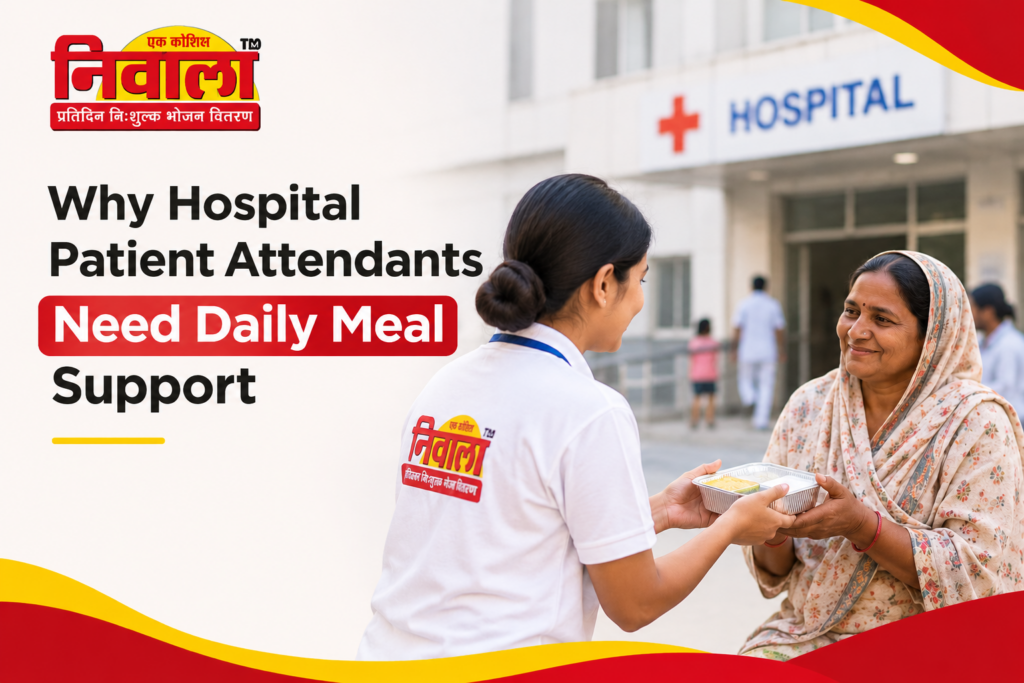
When a family member is admitted to a hospital, the entire family’s attention shifts towards their treatment and recovery. Relatives spend long hours consulting doctors, arranging medicines, completing paperwork, and waiting for medical updates. During this difficult period, one essential need often gets overlooked: regular meals for the people accompanying the patient. Hospital patient attendants play an important role in supporting their loved ones throughout medical treatment. Many families travel from villages, small towns, and distant cities to access better healthcare facilities. They may have to stay near hospitals for several days or even weeks, managing medical responsibilities while dealing with unexpected expenses. Finding affordable and nutritious food every day can become another challenge for these families. This is why hospital patient attendants meal support is important. Organized food donation initiatives can help reduce daily food expenses and ensure that caregivers have access to meals while supporting their family members.
1. Hospital Attendants Often Face Financial Difficulties
Medical emergencies can create significant financial pressure on families. Hospital admission charges, medicines, diagnostic tests, transportation, and accommodation can quickly increase household expenses. For families with limited financial resources, purchasing meals every day becomes an additional responsibility. Someone accompanying a patient may need to remain near the hospital for an extended period, making regular food expenses difficult to manage. In such situations, food assistance for hospital attendants can provide meaningful relief. Access to free meals helps families manage one of their basic daily requirements without adding another expense to an already challenging situation. Food donation programs can therefore play an important role in supporting families who are already spending most of their available resources on medical treatment.
2. Families Travelling From Rural Areas Need Food Assistance
Many patients travel from rural areas and smaller towns to Jaipur for medical treatment. As an important healthcare destination in Rajasthan, Jaipur receives patients from different districts and nearby regions. Family members usually accompany patients because they need someone to assist with hospital admission, medical appointments, medicines, and other treatment-related responsibilities. However, staying in an unfamiliar city can create additional difficulties. Some families may not have relatives nearby, suitable accommodation, or information about affordable food options. Finding fresh and affordable meals every day can become particularly challenging when the hospital stay extends beyond a few days. Food donation for hospital attendants helps address this basic requirement. Community-supported meal distribution initiatives can provide practical assistance to families managing medical expenses, transportation costs, and temporary accommodation.
3. Caregivers Often Neglect Their Own Meals
When someone is admitted to a hospital, family members naturally prioritize the patient’s needs. They may spend several hours waiting outside wards, arranging medicines, communicating with healthcare professionals, and managing treatment-related paperwork. During these responsibilities, their own food requirements can become a low priority. Some attendants may skip breakfast, delay lunch, or miss dinner because they do not want to leave the patient alone. Others may struggle to find affordable food during busy hospital hours. Regular meal support for caregivers helps address this overlooked need. When meals are available through organized distribution programs, attendants can access food without spending additional time searching for affordable options. Supporting caregivers is also an important way of recognizing the effort they make during a family member’s medical treatment.
4. Nutritious and Hygienic Meals Support Everyday Well-Being
People spending long hours in hospitals need access to safe and suitable food to manage their everyday activities. A simple balanced meal may include familiar food items such as rice, dal, roti, and vegetables. These meals can provide nourishment while remaining practical for organized food distribution. However, responsible hospital food donation requires more than simply arranging meals. Food quality and hygiene must remain important priorities throughout the process. Some essential practices include:-
- Preparing meals using fresh ingredients.
- Maintaining cleanliness during food preparation.
- Using appropriate food-grade packaging.
- Following safe storage and transportation practices.
- Distributing food within a suitable time.
- Coordinating with receiving organizations before donating prepared food.
Restaurants, caterers, community groups, and individual donors should coordinate with the receiving organization to understand its current food donation requirements. Responsible food donation means ensuring that meals are fresh, hygienic, and suitable for consumption.
5. Daily Meal Support Can Reduce Emotional Stress
A hospital admission can be emotionally challenging for an entire family. Attendants may experience uncertainty, worry, financial pressure, and physical exhaustion while waiting for their loved one’s recovery. In such circumstances, worrying about the next meal can add another layer of stress. Organized hospital meal distribution programs help address this practical concern by making food assistance available to people who need it. Although a donated meal cannot remove the emotional challenges associated with medical treatment, it can provide comfort and remind families that they are not alone during difficult circumstances. Even a simple act of providing food can make someone’s hospital experience a little easier. Community participation in food donation initiatives can therefore create a meaningful support system for families experiencing unexpected difficulties.
6. Why Organized Hospital Food Donation Programs Matter
Individual food donations can help people immediately, but organized meal distribution programs make it possible to provide support more consistently. A well-managed hospital food donation initiative can focus on several important activities:-
- Identifying people who need food assistance.
- Planning regular meal distribution.
- Maintaining food hygiene and safety.
- Coordinating volunteers and donors.
- Managing food preparation, packaging, and distribution.
- Encouraging long-term community participation.
These activities help connect individuals and businesses willing to contribute with families who need food assistance. Restaurants, caterers, residential communities, and charitable organizations can also participate by supporting meal sponsorships, donating suitable surplus food, or volunteering. Consistent planning and responsible distribution are essential for making food donation efforts meaningful and sustainable.
7. How Niwala Supports Hospital Patient Attendants in Jaipur
Niwala – Ek Koshish, associated with Kamlabai Charitable Trust, works towards reducing hunger through food donation and meal distribution initiatives in Jaipur. According to information published on its official website, Niwala started providing food to families accompanying patients at government hospitals in 2016. The initiative initially covered one hospital and has expanded to five hospitals. The initiative focuses on supporting families who travel from distant rural areas for medical treatment and may struggle to manage their everyday food expenses while staying near hospitals. Through its hospital food distribution efforts, Niwala aims to make meals accessible to people experiencing difficult circumstances. People interested in contributing can learn more about food donation for hospitals in Jaipur and explore ways to support hospital meal distribution initiatives. By encouraging community participation, Niwala aims to make food assistance accessible to more people who need support.
8. How Individuals and Businesses Can Support Hospital Meal Donation
Sponsor Daily Meals
Individuals can contribute financially towards organized meal distribution initiatives. Meal sponsorship helps charitable organizations plan food distribution and support people facing financial difficulties.
Donate Suitable Food
Restaurants, caterers, and families can donate fresh surplus food when it meets the receiving organization’s food safety requirements. Coordination before donating is important to avoid unnecessary food wastage.
Organize Community Food Drives
Volunteer for Food Distribution
Celebrate Special Occasions Through Food Donation
Birthdays, anniversaries, and other celebrations can become opportunities to sponsor meals for people who need support. Those interested in contributing can explore online meal donation options through Niwala and learn how their contributions can support food distribution initiatives. Every contribution, whether financial or through volunteering, can become part of a larger effort to support people experiencing food insecurity.
9. Why Daily Meal Support Matters for Jaipur's Healthcare Community
One Meal Can Make a Difficult Day Easier
Hospital patient attendants play an important role in supporting their loved ones during medical treatment. They manage responsibilities, spend long hours in hospitals, and often put their own needs aside. Daily meal support can help reduce their food expenses, provide access to regular meals, and offer practical comfort during challenging times. Through community participation and organized food donation programs, individuals and businesses can help ensure that families do not have to worry about hunger while dealing with medical emergencies. Niwala – Ek Koshish encourages people to become part of this effort by supporting food distribution initiatives in Jaipur. A small contribution can help provide a meal to someone who needs it. Support food donation, share kindness, and help make sure that no one has to face hunger during a difficult time. Visit Niwala.org to explore ways to contribute.
Frequently Asked Questions
Hospital patient attendants often spend long hours caring for patients and managing medical responsibilities. Daily meal support helps them access regular food and reduces the additional financial burden of purchasing meals during hospital stays.
Food donation provides meals to family members accompanying patients, helping reduce everyday food expenses and allowing them to focus more on their loved one’s treatment and recovery.
You can contact Niwala – Ek Koshish to learn about its hospital food distribution initiative, meal sponsorship opportunities, and current food donation requirements.
According to information published on Niwala’s website, its hospital food distribution initiative supports families accompanying patients at five hospitals in Jaipur. The initiative started in 2016 with one hospital.
Freshly prepared meals containing items such as rice, dal, roti, and vegetables may be suitable, depending on the receiving organization’s requirements. Food must be hygienically prepared, properly stored, and safe for consumption.
Businesses can sponsor meals, organize food donation drives, contribute suitable surplus food, or encourage employees to participate in community food distribution initiatives.
You can visit Niwala’s online donation page, explore the available contribution options, and choose a suitable way to support its food distribution initiatives.