


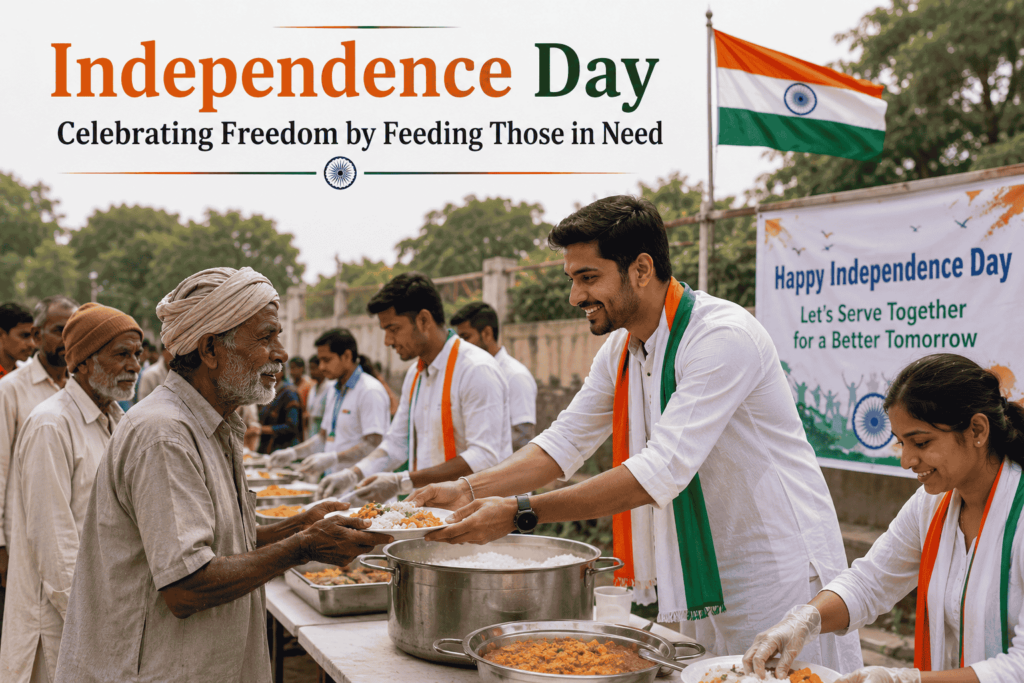
What Makes Independence Day More Meaningful?
Freedom is something we celebrate together, but it also comes with a sense of responsibility toward the people around us.
Our celebrations often focus on flags, decorations, sweets, and events. There is nothing wrong with that. But adding a small act of kindness can give the day a different meaning. You could spend a few hours volunteering, prepare meals with your family, contribute to a community kitchen, or simply share food with people in your local area. The idea is simple: celebrate your happiness by sharing it.
Why Feeding Those in Need Matters
Food is one of the most basic necessities of life. Yet, not everyone has the same ability to afford a regular and nutritious meal. Daily-wage workers, people without stable housing, elderly individuals living alone, and families going through financial difficulties may sometimes need additional support. A meal distribution activity can provide immediate help while also bringing members of a community together. It is not about how many meals you can serve. Even a small effort can matter when it is planned thoughtfully and carried out with respect.
Simple Ways to Celebrate Through Food
1. Plan a Small Meal Drive
Start with a realistic number of meals.
For example, instead of deciding to prepare hundreds of packets without knowing who will receive them, first identify the people or organization you want to support. This makes the activity easier to manage and helps prevent unnecessary food waste.
2. Choose Fresh, Simple Food
The best meal is not necessarily the most expensive one. Simple food such as rice, dal, vegetables, chapati, fruit, or other locally suitable options can make a practical meal. What matters is that the food is fresh, properly packed, and safe to eat. FSSAI’s regulations on recovery and distribution of surplus food emphasize safe handling, hygienic storage, appropriate packaging, and timely distribution.
3. Work With a Trusted Organization
If you want to serve a larger number of people, consider working with an established NGO, community kitchen, or food-relief organization. This can be especially useful if you are searching for food donation opportunities in Jaipur. A local organization may already understand the community, have volunteers, and know where meals are needed.
Before contributing money or food, take a moment to verify the organization and understand how the donation will be used.
4. Get Students Involved
Schools and colleges can turn the occasion into a valuable learning experience.
Students can help collect food, pack meals under supervision, volunteer at a community kitchen, or assist an established organization with distribution. Activities like these teach an important lesson: patriotism is not only expressed through celebrations. It can also be expressed through responsibility, empathy, and service.
Make Food Distribution Respectful
There is an important difference between giving food and helping someone with dignity. People receiving meals should be treated with the same respect as anyone else. Volunteers should communicate politely, avoid creating unnecessary crowds, and distribute food in an organized way. Photography also needs some thought. Someone’s difficult circumstances should not become a backdrop for social media content. If photographs are necessary for documentation or communication, privacy and consent should be respected. The purpose of the activity should remain the same from beginning to end: help people, not showcase their hardship.
Food Safety Should Never Be Ignored
How Jaipur Communities Can Take Part
Businesses Can Celebrate With Purpose
Independence Day also gives businesses an opportunity to involve their employees in community service. A company could sponsor meals, arrange a volunteer activity, support a community kitchen, or partner with a verified organization. Such initiatives work best when the focus remains on genuine community support rather than simply using charity as a marketing opportunity. When employees participate together, the experience can also build teamwork and a stronger connection with the local community.
One Meal Can Still Make a Difference
It is easy to think that a small contribution will not change much. But community service rarely depends on one person doing everything. One person contributes food. Another gives their time. Someone else helps with transportation. A local organization helps identify where support is needed. Individually, these actions may seem small. Together, they can create something meaningful. That is what makes sharing food such a simple but powerful way to celebrate.
7 Simple Ideas for This Independence Day
If you want to do something practical this year, consider:
- Share a fresh meal with someone who needs it.
- Volunteer at a community kitchen.
- Support a verified food-relief organization.
- Organize a small meal drive with friends.
- Involve students in packing or volunteering.
- Encourage your workplace to sponsor meals.
- Plan quantities carefully so your celebration does not create unnecessary food waste.
You do not need to do all seven. Choose one that you can carry out responsibly.