


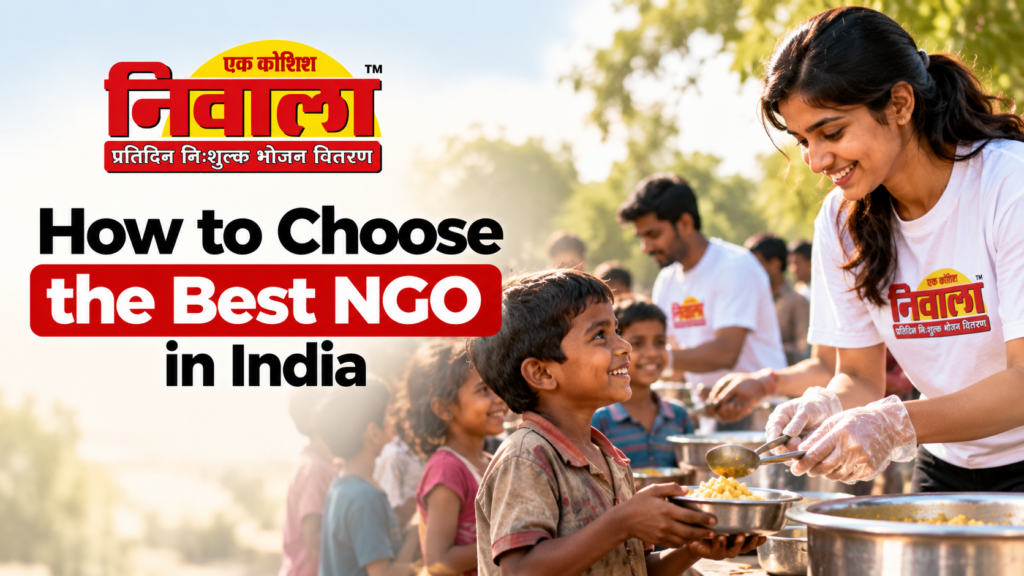
Choosing the right NGO is an important decision for anyone who wants to support meaningful social change. Whether you wish to donate money, contribute food, volunteer your time, or support underprivileged communities, selecting a trustworthy organisation helps ensure that your contribution reaches the people who need it most. India has thousands of non-governmental organisations working in areas such as education, healthcare, hunger relief, women’s empowerment, environmental protection, and rural development. However, not every organisation follows the same standards of transparency, accountability, and community engagement. Understanding how to evaluate an NGO can help donors make informed decisions and build confidence in their charitable contributions. This guide explains how to choose the best NGO in India by examining its credibility, social impact, financial transparency, and commitment to community welfare.
What Makes an NGO Trustworthy?
A trustworthy NGO is an organisation that works consistently towards its social objectives while maintaining transparency in its operations. It should be able to explain its mission, demonstrate its activities, and provide information about how donations are utilised. The best NGO in India is not necessarily the largest organisation or the one with the most impressive advertisements. Instead, it is an organisation that creates measurable social impact, respects the communities it serves, and uses resources responsibly. Before choosing an NGO, consider these essential qualities:-
- A clearly defined social mission.
- Appropriate legal registration and documentation.
- Transparent financial practices.
- Evidence of genuine community engagement.
- Measurable outcomes from its programmes.
- Responsible communication with donors and beneficiaries.
These factors help distinguish organisations with meaningful social impact from those that may lack accountability.
1. Check the NGO’s Registration and Legal Credentials
The first step in choosing a reliable NGO is verifying its legal identity. In India, NGOs may operate as registered public charitable trusts, societies, or Section 8 companies. Legal registration establishes an organisation’s formal identity, but it does not automatically guarantee that its programmes are effective or that every donation will be used appropriately. Donors should examine the organisation’s registration details and check whether its publicly available information matches its official dopkeasecuments.
Important NGO Registrations to Understand
NGO Darpan ID: NITI Aayog maintains the NGO Darpan portal, which provides a platform for eligible non-profit organisations to register and obtain a Unique Identity Number. This ID is relevant for several government-related processes, including grants and certain regulatory applications.
12A registration or approval: This relates to an NGO’s eligibility for tax exemption under the applicable income-tax provisions.
80G approval: This may allow eligible donors to claim a deduction for qualifying donations, subject to applicable conditions and tax rules.
FCRA registration or prior permission: An organisation generally needs appropriate FCRA authorisation to receive foreign contributions legally. Donors can verify relevant information through the Ministry of Home Affairs’ official FCRA portal.
These credentials serve different purposes. A donor should check the specific registration that is relevant to the organisation’s activities and the intended contribution.
2. Understand the NGO’s Mission and Area of Work
Every NGO has a particular purpose. Some organisations focus on education, while others work towards healthcare access, poverty reduction, hunger relief, or environmental sustainability. Before donating, understand what the organisation is trying to achieve and whether its mission aligns with your values. For example, if your primary concern is hunger, you may want to support an NGO that provides nutritious meals, distributes food to underserved communities, or works to reduce food waste. Similarly, someone interested in education may prefer an organisation that supports school access, learning resources, or educational programmes for children. Ask yourself:-
- What social problem does the NGO address?
- Which communities benefit from its programmes?
- Does the organisation have a clear and achievable mission?
- Are its activities consistent with its stated objectives?
A clearly defined mission helps an NGO remain focused and makes it easier for donors to understand the purpose of their contributions.
3. Evaluate the NGO’s Transparency and Financial Accountability
Financial transparency is one of the most important factors when choosing a charitable organisation. Donors should be able to understand how an NGO receives funds, manages expenses, and allocates resources to its programmes. A responsible organisation should make relevant information available through its website, annual reports, financial statements, or donor communications. Look for:-
- Annual reports explaining the organisation’s activities.
- Audited financial statements, where applicable.
- Information about programme expenditure.
- Details about fundraising and administrative expenses.
- Donation receipts and relevant tax documentation.
- Clear explanations of how donations support its mission.
It is important to understand that administrative expenses are not automatically a sign of poor performance. NGOs need resources for staff, transportation, programme management, technology, and compliance. The real question is whether the organisation manages its resources responsibly and demonstrates meaningful results.
4. Look for Evidence of Real Community Impact
An NGO’s reputation should be supported by evidence of its work. Rather than relying only on promotional statements, examine whether the organisation provides credible information about its programmes and the communities it serves. For example, an NGO working in hunger relief might report:-
- The number of meals distributed.
- The communities or locations served.
- The number of people reached.
- The frequency of food distribution activities.
- The steps taken to maintain food quality and safety.
However, numbers alone do not tell the complete story. A meaningful evaluation should also consider whether the organisation’s work addresses the underlying problem and whether its programmes create lasting benefits. For instance, providing meals during an emergency is valuable, while long-term hunger reduction may also require nutritional awareness, community partnerships, and sustainable food distribution systems. Look for authentic programme photographs, credible reports, beneficiary feedback shared with appropriate consent, and specific examples of completed initiatives.
5. Check the NGO’s Local Presence and Community Relationships
An organisation’s understanding of local communities can significantly influence the effectiveness of its programmes. NGOs working directly with communities often understand their challenges, cultural practices, and practical needs more clearly. If you are looking for a charitable organisation in Jaipur or another Indian city, consider whether the NGO has a genuine presence in the area. Check whether it works with local volunteers, community leaders, schools, healthcare providers, or other relevant organisations. Local engagement can help ensure that assistance reaches the intended beneficiaries and that programmes are designed around actual community needs. For example, an organisation supporting food-insecure families in Jaipur may understand which communities face difficulties accessing nutritious meals and what type of support would be most useful. A strong local presence does not automatically guarantee quality, but it can provide valuable insight into an NGO’s practical experience.
6. Read Reviews, Testimonials, and Public Feedback
Online reviews and testimonials can provide additional information about an NGO’s reputation. Check its official website, social media profiles, and publicly available feedback from donors and volunteers. Look for consistent patterns rather than relying on a single positive or negative review. Useful questions include:-
- Do volunteers describe genuine involvement in the organisation’s work?
- Does the NGO respond professionally to questions?
- Are its activities communicated consistently?
- Do public reports match its promotional claims?
- Does it address concerns transparently?
Testimonials can help you understand an organisation’s approach, but they should not replace independent verification. Similarly, a large social media following does not necessarily indicate that an NGO is effective or financially accountable. Use reviews as one part of your overall evaluation.
7. Understand How Your Donation Will Be Used
Before making a donation, understand what your contribution will support. Some NGOs accept unrestricted donations that can be used wherever funds are most needed. Others collect contributions for specific initiatives, such as food distribution, school supplies, medical assistance, or emergency relief. Both approaches can be valuable, provided the organisation communicates its funding policies clearly. If you are considering an online donation, check:
- Whether the payment page belongs to the genuine organisation.
- Whether the NGO provides a donation receipt.
- Whether the payment details match the organisation’s identity.
- Whether the donation purpose is clearly explained.
- Whether relevant tax-benefit documentation is available.
Avoid making donations under pressure from unsolicited messages or emotional appeals that cannot be independently verified. A responsible NGO should give donors sufficient information to make a thoughtful decision.
8. Consider Volunteering Before Making a Long-Term Commitment
Volunteering is another way to understand an NGO’s work and assess its community impact. By participating in activities, you can observe how programmes are organised, how volunteers are treated, and how beneficiaries are supported. Volunteering opportunities may include:-
- Food distribution and community meal programmes.
- Educational support for children.
- Fundraising and awareness campaigns.
- Community outreach activities.
- Environmental initiatives.
- Administrative and digital support.
Volunteering can also help build a deeper connection with the cause you support. If you are unable to volunteer regularly, consider participating in occasional events or contributing professional skills such as content writing, graphic design, digital marketing, or data management.
Why Supporting Community-Focused NGOs Matters
Community-focused NGOs play an important role in addressing social challenges that may require additional attention and resources. Their work can complement public welfare initiatives by identifying local needs, mobilising volunteers, and supporting vulnerable communities. For example, organisations working to reduce hunger can help improve access to food for families facing economic hardship. Similarly, educational initiatives can provide learning opportunities to children who may otherwise struggle to access essential resources. Supporting a credible NGO is not simply about making a financial contribution. It is about participating in a collective effort to create a more equitable and compassionate society. Organisations such as Niwala focus on addressing hunger and supporting communities through charitable initiatives. Donors should review an organisation’s current activities, available donation options, and relevant documentation before contributing.
Recognise the Warning Signs of an Untrustworthy NGO
While many NGOs work sincerely towards social welfare, donors should remain cautious when evaluating charitable organisations. Certain warning signs may indicate that further verification is necessary. Be careful if an organisation:-
- Refuses to share its registration details.
- Makes unrealistic promises about social impact.
- Uses misleading photographs or unverifiable beneficiary stories.
- Pressures people to donate immediately.
- Provides unclear payment information.
- Avoids questions about financial accountability.
- Claims that every donation automatically qualifies for tax benefits.
These signs do not always prove wrongdoing, but they should encourage donors to investigate further. A trustworthy organisation should be willing to answer reasonable questions and provide relevant information about its work.
Make an Informed Decision Before Donating
Choosing the best NGO in India requires more than checking its website or reading a few reviews. A thoughtful donor considers the organisation’s legal identity, mission, financial practices, community relationships, and demonstrated impact. Before making a donation, take a few minutes to review its documentation, understand its programmes, and determine whether its approach aligns with your charitable goals. You can also begin with a smaller contribution and evaluate the organisation’s communication and reporting before making a larger or recurring donation. Remember that meaningful social change often requires long-term commitment. Supporting a responsible NGO can help create opportunities, improve access to essential services, and strengthen communities. The most valuable contribution is one that is made thoughtfully, transparently, and with a genuine commitment to helping others.