


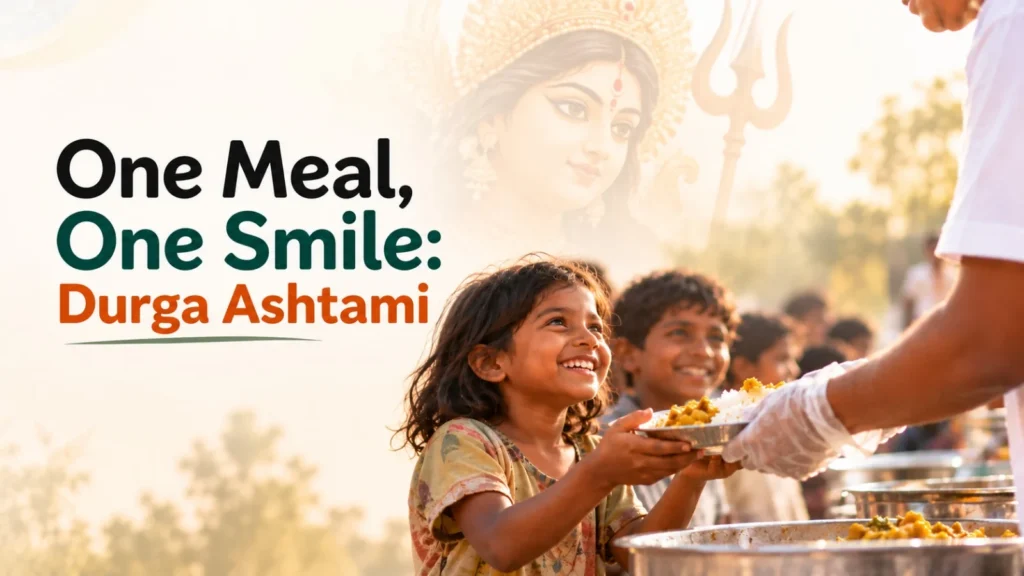
One Meal, One Smile Celebrate the Spirit of Durga Ashtami Through Food Donation

One Meal, One Smile Celebrate the Spirit of Durga Ashtami Through Food Donation

Durga Ashtami is a meaningful occasion to celebrate faith, gratitude, courage, and kindness. During Navratri, families come together to worship Maa Durga, follow cherished traditions, and share happiness with their loved ones. It is also a time to reflect on how small acts of generosity can make a positive difference in the community.
One meaningful way to celebrate is through Durga Ashtami food donation. Supporting meal distribution, contributing towards food programmes, and helping people experiencing food insecurity can turn the spirit of celebration into an act of compassion. In Jaipur, food donation initiatives such as Niwala focus on helping people access meals. By supporting responsible community programmes, individuals and families can make kindness an important part of their festive celebrations.

What Is the Significance of Durga Ashtami?

Durga Ashtami, also known as Maha Ashtami, is an important day during Navratri. Devotees worship Maa Durga and reflect on the values of courage, devotion, strength, and the victory of good over evil. Many families observe prayers, prepare traditional food, and participate in Kanya Pujan, a ritual that honours young girls. Although customs differ between households and regions, gratitude, faith, and generosity are meaningful parts of the celebration for many people. Food donation offers one way to extend the spirit of kindness beyond the home. Helping others access meals can be a thoughtful expression of compassion during this auspicious occasion.

Why Is Food Donation Meaningful During Durga Ashtami?

Food is a basic necessity, yet some individuals and families struggle to access regular meals. Supporting responsible food distribution programmes can help direct resources towards people who need assistance.
During Durga Ashtami, families can consider contributing towards meal programmes, friends can organise voluntary community collections, and local businesses can explore opportunities to support food donation initiatives.
Food donation is not a religious requirement. Rather, it is a voluntary way to practise generosity and contribute to community well-being.

Durga Ashtami Food Donation in Jaipur: How One Meal Can Make a Difference

Food donation in Jaipur can provide practical support to people experiencing food insecurity. Organised meal distribution helps connect contributions with programmes intended to make meals accessible to those who need them.
According to Niwala’s organisational information, its food distribution initiative began in 2016, initially supporting people accompanying patients at a government hospital. The organisation reports that its programme later expanded to serve people at five hospitals.
Families travelling to Jaipur for medical treatment may have to manage transport, accommodation, medicines, and everyday food expenses. These responsibilities can create additional challenges when a family is already dealing with a difficult situation.
Access to a meal can offer practical assistance during such times. Supporting responsible food donation programmes is one way to help extend community care beyond festivals.

How to Celebrate Durga Ashtami with Food Donation in Jaipur

You do not need to organise a large event to make a meaningful contribution. Here are four practical ways to include food donation in your Durga Ashtami celebration.

1. Contribute Towards Meal Distribution

One option is to make a voluntary financial contribution towards an organised meal programme. This can be convenient for people who want to help but cannot personally prepare or distribute food. Before contributing, review the organisation’s programme information, available donation options, and donation terms. Choose an amount that suits your circumstances.

2. Make Food Donation a Family Tradition

Durga Ashtami can be an opportunity for families to discuss gratitude, kindness, and community responsibility. Family members can decide together whether they would like to support a meal programme as part of their celebrations. Children can participate in age-appropriate ways with guidance from their parents. The purpose is not the size of the donation. It is encouraging a thoughtful approach to helping others.

3. Encourage Friends and Neighbours to Participate

Friends, neighbours, housing societies, and local community groups can work together to support a food donation initiative. Each participant can contribute voluntarily according to their ability. Before collecting money or arranging food distribution, agree on the purpose and check the receiving organisation’s details. Transparent arrangements help participants understand the purpose of the activity and how contributions are being managed.

4. Donate Surplus Food Responsibly

Festive gatherings sometimes result in surplus food. Rather than allowing suitable food to go to waste, organisers can contact a food donation organisation to ask whether collection or redistribution is possible. Food safety is essential. Prepared meals should only be donated when they can be handled, stored, transported, and distributed safely. Always confirm the receiving organisation’s requirements before arranging a cooked food donation. Not every organisation can accept every type of food.

How to Choose a Food Donation NGO in Jaipur

If you are looking for a food donation NGO in Jaipur, take time to understand its work before contributing.
Consider these important factors:-

  • Mission and activities:- Understand the organisation’s purpose and the programmes it describes.
  • Donation transparency:- Review donation options, terms, and confirmation procedures.
  • Programme information:- Look for verifiable details about meal distribution and the communities served.
  • Contact information:- Check whether the organisation provides a way to ask questions about donations or volunteering.
  • Responsible practices:- Consider whether the organisation respects the dignity and privacy of people receiving assistance.

These checks can help donors make informed decisions and support initiatives that align with their intentions.

Why Consider Niwala for Durga Ashtami Food Donation?

Niwala is a food donation initiative based in Jaipur that focuses on food distribution and helping people access meals. Its organisational information describes a programme that began in 2016 and expanded from supporting people accompanying patients at a government hospital to serving people at five hospitals. People interested in supporting Niwala can review its current programme information, donation terms, and available contribution options before making a decision. Understanding how an organisation describes its work is an important step towards responsible giving. Donors should rely on verifiable information and ask questions whenever programme details are unclear.

How Can Food Donation Support a More Caring Community?

Food donation can contribute to a more caring community when it is organised responsibly and carried out with respect.

Give According to Your Ability

Every contribution should be voluntary. Choose an amount that fits your circumstances without comparing your donation with someone else’s.

Respect People's Dignity

People receiving food assistance deserve to be treated with respect. Avoid making assumptions about their personal circumstances, and obtain appropriate permission before taking or sharing photographs.

Support Consistent Community Efforts

Hunger is not limited to festivals. While Durga Ashtami offers a meaningful opportunity to contribute, responsible food donation initiatives can also be supported throughout the year.
A festive contribution can become the beginning of a longer commitment to kindness and community service.

Encourage Responsible Food Practices

Food donation should always consider hygiene, freshness, storage, transportation, and safe distribution. Coordinating with an organisation before donating prepared food can help reduce waste and protect recipients.

Celebrate Durga Ashtami with One Meal, One Smile

Durga Ashtami is an opportunity to celebrate faith, appreciate our blessings, and reflect on kindness. Alongside prayers and family traditions, supporting responsible food donation can be a meaningful way to extend care to the wider community.
This year, consider making Durga Ashtami food donation part of your celebration. Whether you contribute towards meal distribution, encourage friends to participate, or learn more about food donation initiatives in Jaipur, choose an action that is thoughtful, voluntary, and responsible.
Niwala’s food distribution initiative offers one way to learn about community meal support in Jaipur. By understanding its work and exploring available contribution options, you can make an informed decision about supporting its mission.
One meal can offer support. One thoughtful action can inspire another. Together, we can help build a more caring community, one meal at a time.

Frequently Asked Questions About Durga Ashtami Food Donation

You can support an organised meal programme by reviewing its donation options and making a voluntary contribution. If you want to donate cooked food, contact the organisation first to confirm its acceptance policy and food safety requirements.
Durga Ashtami is associated with devotion, gratitude, and the worship of Maa Durga. Food donation offers one practical way to express compassion and support people who may struggle to access regular meals.
Yes. Review the available contribution options and choose an amount that is comfortable for you. Giving should always be voluntary and within your means.
Niwala is one initiative to explore if you are interested in meal distribution in Jaipur. Review its organisational information, programme details, and donation terms before contributing.
Possibly, depending on the organisation’s policy and whether the food can be handled and distributed safely. Contact the organisation first and follow its instructions.
Review its mission, contact information, programme details, donation terms, and available reporting. Ask questions when information is unclear, and look for verifiable evidence rather than relying only on promotional claims.
Families can consider supporting a meal programme, encouraging voluntary contributions, or learning about responsible food distribution. The activity should be suitable for the family and based on a genuine desire to help.

Leave a Comment

Your email address will not be published. Required fields are marked *