


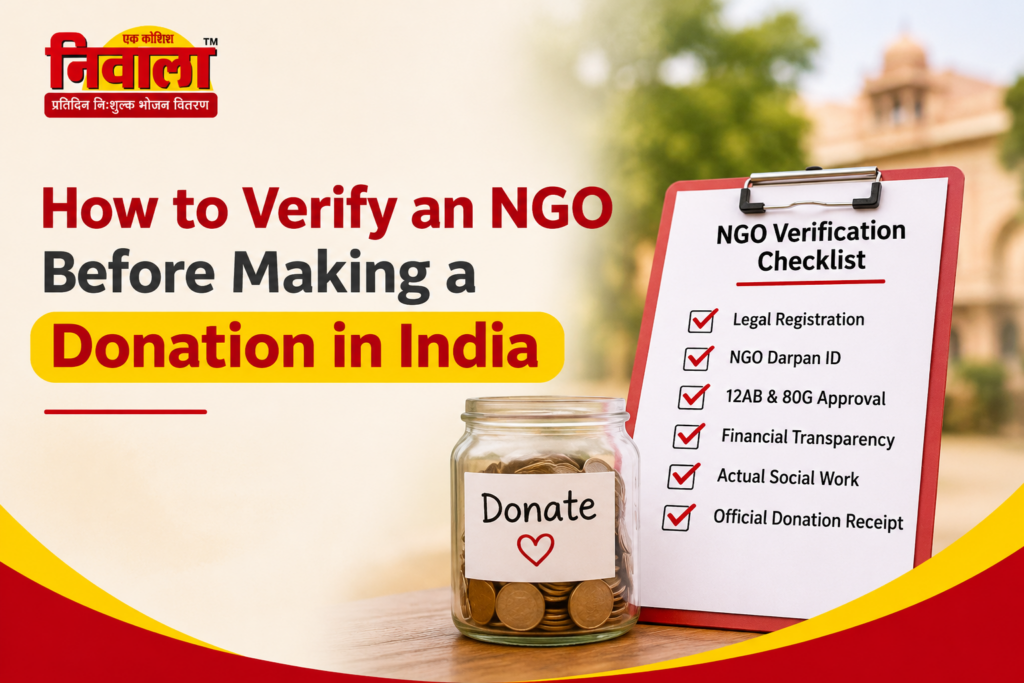
Donating to a charitable organisation is one of the simplest ways to support people in need. Whether you want to provide meals to underprivileged families, support children’s education, or contribute to healthcare initiatives, your donation can make a meaningful difference. However, before transferring money, it is important to understand how to verify an NGO before donating in India. With the growing number of charitable organisations and online fundraising campaigns, donors should take a few precautions to ensure their contributions reach genuine organisations. Checking legal registration, financial transparency, official documents, and actual social activities can help you make an informed decision. If you are planning to support an NGO in India, here are some practical steps to check its credibility before making a donation.
1. Check the NGO's Legal Registration
The first step in NGO verification in India is checking whether the organisation is legally registered. Genuine charitable organisations generally operate through a registered trust, society, or Section 8 company. Ask the NGO for its registration certificate and verify the following details:-
- Official name of the organisation.
- Registration number and date.
- Registered office address.
- Name of the registering authority.
- Details of trustees, directors, or authorised representatives.
Make sure the organisation’s name matches across its registration documents, website, and donation receipts. An organisation claiming to be a registered NGO should be able to explain its legal structure and provide supporting documentation.
2. Verify the NGO Darpan ID
The NGO Darpan portal, managed by NITI Aayog, is an important resource for checking information about nonprofit organisations in India. Many NGOs registered on the portal receive a unique NGO Darpan ID. Donors can request this ID and check the organisation’s available details. While checking an NGO Darpan profile, look for:-
- Organisation name and unique ID.
- Registered address.
- Contact information.
- Details of key office bearers.
- Available registration information.
Remember that an NGO Darpan ID alone does not guarantee that an organisation is genuine or that every activity is effective. It should be considered one part of your overall verification process.
3. Check 12AB and 80G Tax Registration
Tax-related registrations are another important consideration when selecting a charitable organisation. 12AB registration relates to income-tax exemptions available to eligible charitable institutions, subject to applicable conditions. 80G approval allows eligible donors to claim a tax deduction for qualifying donations, subject to the applicable rules and limits. Before donating, ask the organisation for its current approval details and verify:-
- Name of the registered organisation.
- PAN details.
- Applicable registration or approval number.
- Validity period.
- Whether the approval covers the proposed donation.
Do not assume that every registered NGO automatically offers tax benefits. Also, an 80G certificate does not independently prove the quality or effectiveness of an NGO’s work. If you are donating for tax benefits, check the latest Income Tax Department requirements and request the appropriate donation documentation.
4. Review the NGO's Website and Online Presence
A professional website can help donors understand an organisation’s mission, activities, and contact information. However, having a website does not automatically establish credibility. You should examine whether the information published online is consistent and verifiable. Look for:-
- A clear mission and vision.
- Information about ongoing projects.
- Organisation registration details.
- Official contact information.
- Donation methods and payment information.
- Photographs and updates from actual activities.
- Details about how contributions are used.
You can also check the NGO’s social media profiles for recent updates, programme announcements, and community engagement. For example, people interested in supporting food donation in Jaipur can explore organisations working on hunger relief and understand how their meal distribution programmes operate.
5. Examine Financial Transparency and Annual Reports
Financial transparency is one of the strongest indicators of responsible NGO management. Before making a large donation, ask whether the organisation publishes annual reports, audited financial statements, or programme expenditure reports. These documents can help you understand:-
- Total donations received.
- Administrative expenses.
- Programme-related expenditure.
- Fund utilisation.
- Major charitable activities.
- Financial accountability.
A responsible organisation should be willing to explain how donations are utilised. Do not judge an NGO only by the percentage it spends on administration. Some operational expenses, including transportation, staff, food storage, and programme management, are necessary for delivering charitable services. The important thing is whether spending is reasonable, documented, and connected to the organisation’s objectives.
6. Verify Its Actual Social Work and Activities
One of the most important steps in checking an NGO before donating is understanding what it actually does. Do not rely entirely on attractive advertisements or emotional fundraising messages. Look for evidence of real activities and measurable outcomes. You can:-
- Review recent project photographs and videos.
- Check programme updates.
- Ask about the communities being supported.
- Understand how beneficiaries are selected.
- Request information about completed projects.
- Visit the organisation’s office or an activity location when possible.
For example, a food donation organisation should be able to explain how meals are prepared, distributed, and delivered to people experiencing food insecurity. In Jaipur, organisations working with families of patients, underprivileged communities, and people facing hunger can provide useful information about their local initiatives.
7. Check FCRA Registration for Foreign Donations
If you are donating from outside India or an organisation claims to accept foreign contributions, checking its FCRA status is particularly important. The Foreign Contribution (Regulation) Act (FCRA) regulates the acceptance and utilisation of foreign contributions by eligible organisations in India. You can use the official Ministry of Home Affairs FCRA portal to check relevant registration or prior permission details. Important things to verify include:-
- FCRA registration or prior permission.
- Validity of the registration.
- Name of the registered organisation.
- Relevant compliance information.
An NGO does not need FCRA registration simply to receive domestic donations. This requirement is relevant when accepting foreign contributions under applicable law.
8. Always Ask for an Official Donation Receipt
After making a contribution, request an official donation receipt. A proper receipt helps maintain a record of your donation and provides evidence of the transaction. Check whether it includes:-
- Registered organisation’s name.
- Donation amount.
- Date of payment.
- Donor details, where applicable.
- PAN or other relevant identification details.
- Tax approval information, if applicable.
For eligible donations, also ask about the applicable tax certificate and reporting requirements. Avoid transferring money to an individual’s personal account unless the organisation can clearly establish that the payment method is authorised and properly documented.
9. Identify Warning Signs Before Donating
Being careful does not mean avoiding charitable giving. It simply means making sure your generosity reaches the right place. Watch out for these warning signs:-
- No registration documents or verifiable organisational details.
- Personal bank accounts with no clear explanation.
- Pressure to donate immediately.
- No donation receipts.
- Unrealistic promises about the impact of a small donation.
- No information about ongoing activities.
- Inconsistent names, addresses, or contact details.
- Refusal to answer reasonable questions about fund utilisation.
If something seems suspicious, pause the transaction and verify the information independently.
Why Choosing the Right NGO Matters
Choosing a credible NGO helps ensure that your contribution supports meaningful social initiatives. Even a small donation can help provide essential resources when it reaches the right people through responsible programmes. For instance, food donation initiatives can support families facing financial difficulties, individuals accompanying patients at hospitals, and communities struggling with access to nutritious meals. In Jaipur, Niwala works towards reducing hunger through its Niwala-Ek Koshish initiative. Its food distribution efforts began in 2016, initially supporting families of patients at a government hospital and subsequently expanding to five hospitals, according to its published organisational information. People interested in supporting hunger-relief initiatives can explore its food donation programmes and learn more about its mission and activities. Before making any donation, you should still review the organisation’s current documents, payment details, and applicable tax approvals.