


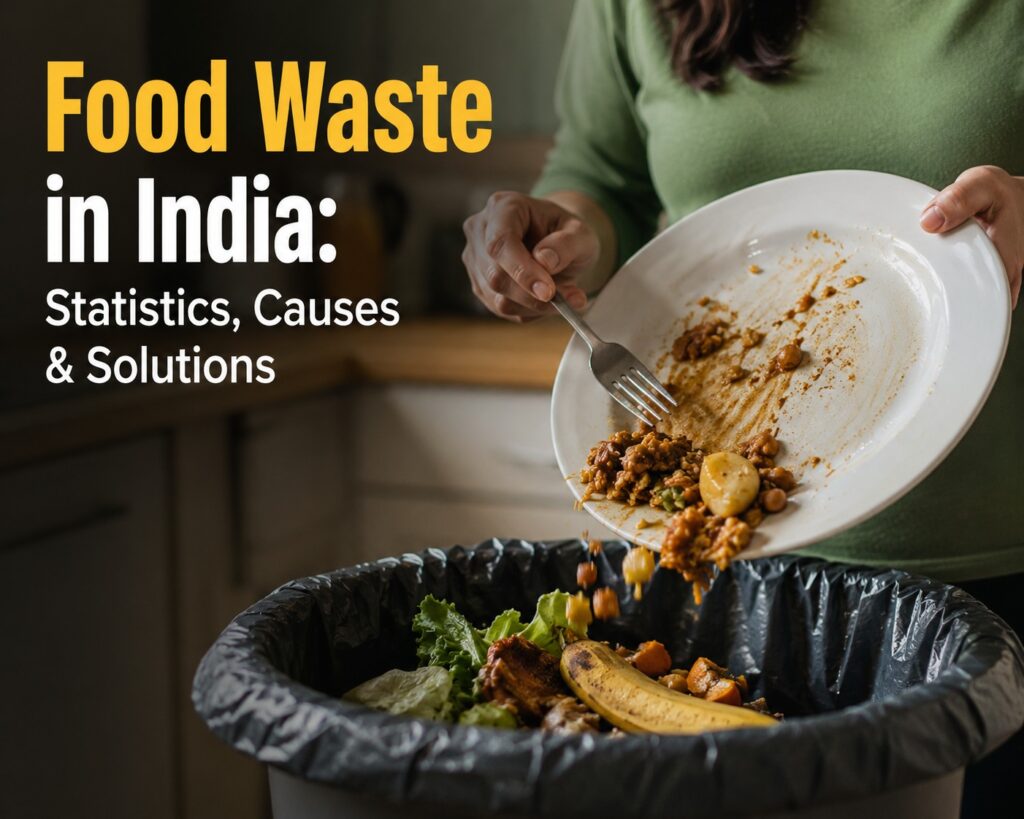
Food is something we all need every day, yet a surprising amount of it never gets eaten. It may be extra food left after a family meal, meals prepared in excess at weddings and events, unsold food from businesses, or groceries that spoil before they are used. In India, this is a serious issue. According to the UNEP Food Waste Index 2024, Indian households generate an estimated 78.2 million tonnes of food waste every year, equivalent to around 55 kg per person annually. The estimate is based on available data and has a medium level of confidence, so it should be understood as an estimate rather than an exact national measurement. The problem is bigger than food ending up in a bin. When edible food is wasted, the water, land, energy, labour, transportation, and money used to produce and move that food are wasted too. The good news is that food waste can be reduced. Small changes at home, in restaurants, at events, and across communities can make a real difference.
Wasted food in India?
The numbers help us understand the scale of the problem. UNEP’s 2024 estimates put household food waste in India at approximately 78.2 million tonnes per year, or about 55 kg per person. WRI India notes that this amount could feed nearly 377 million people, highlighting the gap between food being discarded and food that could potentially be used.
However, it is important to understand what this figure represents. It is primarily an estimate of household food waste, rather than a complete measurement of every type of food loss across farming, transportation, processing, retail, restaurants, and households. That distinction matters because food can be lost at many points before it reaches a person’s plate.
What Causes Food Waste in India?
1. Cooking More Food Than Needed
One of the most common reasons for food waste is simply preparing more than people can eat. This often happens during family gatherings, festivals, parties, weddings, and other celebrations. Once everyone has finished eating, the remaining food may not be stored or used properly. Planning portions according to the expected number of people can reduce this problem.
2. Buying More Than We Need
3. Poor Storage
4. Large Portions and Unfinished Meals
5. Food Left Over After Events
Why Food Waste Is a Bigger Problem Than It Looks
Throwing away food may seem harmless because food is biodegradable. But the environmental impact does not disappear when food enters a waste bin. Food production requires land and water. Farming, processing, refrigeration, packaging, and transportation also consume energy and resources. When food is wasted, these resources have effectively been used to produce something that was never consumed.
WRI India notes that food loss and waste also contribute to greenhouse gas emissions, while food waste occurs across households, food services, and retail. Reducing waste therefore has benefits beyond saving money. It can also support more responsible use of natural resources.
Food Waste and Hunger: The Connection
There is an uncomfortable contrast between edible food being discarded and people struggling to access nutritious meals. Reducing food waste does not automatically solve hunger. The two issues are connected, but they require different solutions. Still, when safe surplus food can be recovered and redistributed instead of discarded, it creates an opportunity to support people who need meals.
FSSAI’s Save Food Share Food initiative promotes the recovery and redistribution of surplus food and works with food recovery agencies and NGOs. FSSAI also has regulations covering the recovery and distribution of surplus food, including food safety and hygiene requirements. This is where responsible food donation can become part of the solution.
How to Reduce Food Waste at Home
You do not need to make major lifestyle changes to start wasting less food.
Try these simple habits:-
- Plan meals before shopping.
- Buy perishable items in realistic quantities.
- Store food properly.
Keep track of leftovers. - Serve smaller portions first.
- Use suitable leftovers in another meal.
- Check your refrigerator regularly.
- Freeze food when appropriate.
- Share safe surplus food instead of throwing it away.
The goal is not to make every meal perfect. It is to become more aware of what we buy, prepare, eat, and discard.
How Restaurants and Businesses Can Reduce Food Waste
Food businesses can make an even larger impact because they handle food at scale. Restaurants, hotels, caterers, offices, and event organizers can track what is being wasted and identify where the biggest losses occur. For example, a restaurant may discover that certain dishes are regularly overproduced, while an event organizer may notice that excessive portions are left after every function.
Businesses can respond by improving purchasing, adjusting portion sizes, monitoring inventory, and creating a safe process for handling eligible surplus food. FSSAI’s food-safety framework provides guidance and regulations around the recovery and distribution of surplus food, making safe handling an important part of any donation process.
What Can Communities Do?
Food waste is not only an individual issue. Communities can also play an important role.
Housing societies, schools, colleges, offices, restaurants, and local organizations can work together to create awareness and encourage responsible food use. In cities such as Jaipur, community groups can organize food-awareness campaigns, support meal-sharing initiatives, and connect eligible surplus food with trusted organizations. The focus should always be on safe food, responsible distribution, and treating recipients with dignity.
How Food Donation Can Help
Food donation can be useful when surplus food is still safe and suitable for consumption. Instead of throwing away untouched, properly handled surplus meals from an event, organizers can coordinate with a trusted food-relief organization to see whether the food can be safely redistributed. However, not all leftover food should be donated. Food that has been contaminated, improperly stored, or is otherwise unsafe should never be distributed.
This is why planning is important. Donors and receiving organizations need to consider food safety, packaging, storage, transportation, and timely distribution. A responsible approach helps ensure that reducing waste does not create a food-safety risk.
How You Can Make a Difference
You do not have to wait for a large campaign to start reducing food waste.
At home, begin by buying only what you need. At an event, estimate portions carefully. At a restaurant, order according to your appetite. If you have safe surplus food, explore responsible ways to share it.
If you are in Jaipur and want to support a local initiative, you can also connect with a trusted organization working on food donation and community support. Small actions become powerful when many people adopt them consistently.