


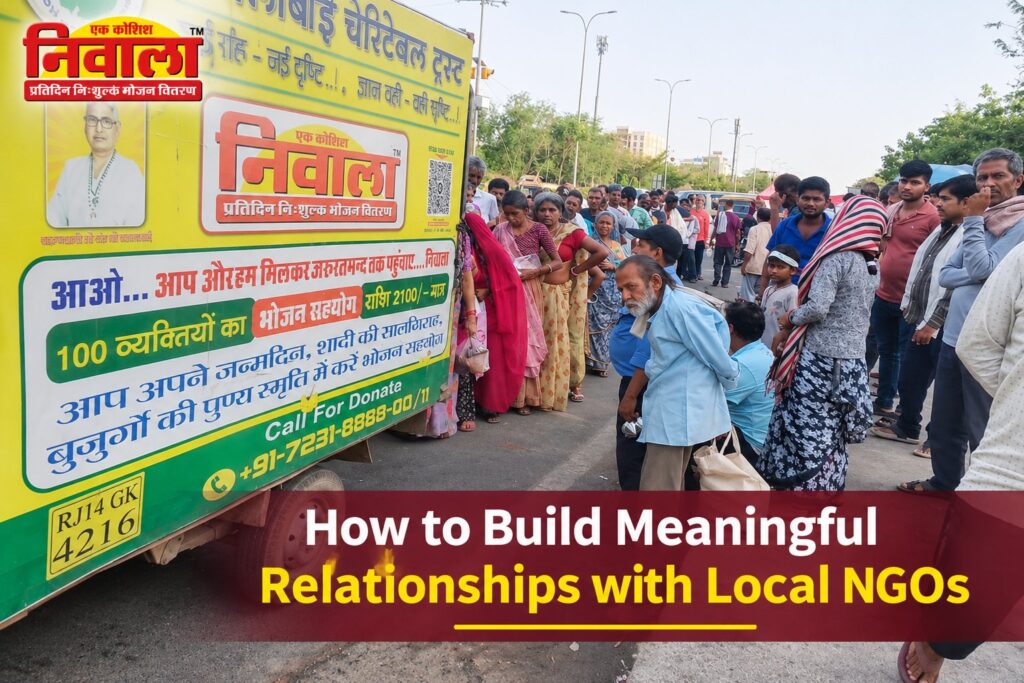
Strong communities are built when people come together to support a common cause. Whether it is fighting hunger, improving education, supporting healthcare or helping underprivileged families, non-governmental organisations (NGOs) play an important role in creating positive social change. However, meaningful community development cannot be achieved by one organisation working alone. It requires cooperation, trust and long-term relationships between individuals, businesses, volunteers and local NGOs. Building meaningful relationships with local NGOs is one of the most effective ways to understand community needs and contribute to sustainable development. These partnerships allow people to share resources, exchange knowledge and participate in initiatives that create a lasting difference. For individuals and businesses in Jaipur, working with a local NGO can also provide opportunities to support food donation, community welfare and other social initiatives.
1. Understand the Mission and Work of Local NGOs
The first step towards building a meaningful relationship with an NGO is understanding its mission, vision and activities. Every organisation works towards different social objectives. Some focus on education, while others concentrate on healthcare, environmental protection, women empowerment or food distribution. Before approaching an organisation, explore its website, ongoing programmes, community initiatives and previous activities. This will help you understand whether its objectives align with your interests. For example, if you are passionate about fighting hunger, connecting with a food donation NGO in Jaipur can help you participate in meal distribution initiatives and support people experiencing food insecurity. Understanding an NGO’s work also helps establish a partnership based on shared goals rather than temporary involvement.
2. Build Trust Through Consistent Communication
Trust is the foundation of every successful NGO partnership. Meaningful relationships develop when both sides communicate openly, respect each other’s responsibilities and maintain regular contact. Start with a simple conversation to understand the organisation’s requirements, challenges and expectations. Ask questions about its ongoing projects and explore how you can contribute. Some effective communication practices include:-
- Schedule regular meetings to discuss activities and progress.
- Share updates about ongoing contributions and initiatives.
- Be transparent about available resources and commitments.
- Listen to feedback from NGO representatives and community members.
- Maintain professional and respectful communication.
Consistent communication helps create stronger relationships and ensures that everyone involved understands the purpose of the partnership.
3. Participate in Community Activities and Volunteer Programmes
One of the best ways to develop a meaningful connection with an NGO is by participating in its community activities. Volunteering allows individuals to understand real social challenges while contributing their time, skills and energy. Depending on an organisation’s requirements, volunteers can participate in:-
- Food collection and distribution programmes.
- Community awareness campaigns.
- Educational support activities for children.
- Health and hygiene awareness initiatives.
- Fundraising and donation drives.
- Local cleanliness and environmental activities.
For people interested in NGO volunteering opportunities in Jaipur, participating in community-based initiatives can be a practical starting point. Volunteering is not only about providing assistance. It is also about understanding people’s experiences, respecting their needs and becoming an active part of positive change.
4. Focus on Shared Goals and Long-Term Impact
A successful relationship between organisations should be built around common objectives. Before starting a partnership, identify the social issues both organisations want to address. For instance, a business and a local NGO might work together to support food donation initiatives, while an educational institution could collaborate with an NGO to provide learning resources to children. Instead of focusing only on short-term activities, develop a long-term approach that supports continuous improvement. Some ways to achieve this include:-
- Establish clear partnership objectives.
- Identify the responsibilities of each organisation.
- Plan activities according to community requirements.
- Review progress regularly.
- Evaluate the impact of joint initiatives.
When organisations work towards shared goals, their combined efforts can create more meaningful and sustainable community development.
5. Support NGOs Through Donations and Available Resources
Financial support is important for many NGOs because it helps them manage programmes, purchase essential supplies and reach more people. However, support does not always have to involve money. Individuals and businesses can contribute through different resources depending on their capacity and the organisation’s needs. Some meaningful ways to support local NGOs include:
- Donating funds for community welfare programmes.
- Contributing fresh food and essential supplies.
- Providing educational materials for children.
- Offering professional services and technical expertise.
- Supporting transportation and logistics.
- Helping NGOs promote their initiatives through digital platforms.
For example, food donation in Jaipur can become a meaningful community initiative when individuals, restaurants, event organisers and NGOs work together to ensure that suitable surplus food reaches people who need it. Before donating food, always coordinate with the NGO to understand its collection, storage, hygiene and distribution requirements.
6. Encourage Businesses to Develop NGO Partnerships
Businesses can play an important role in strengthening local communities through responsible social initiatives. Corporate Social Responsibility (CSR) activities provide opportunities for companies to work with NGOs and contribute to social development. Instead of treating donations as one-time activities, businesses can establish ongoing partnerships with organisations working in relevant areas. For example, restaurants can coordinate suitable food donations, companies can organise employee volunteering activities, and local businesses can support fundraising campaigns. Businesses can also contribute their expertise in marketing, technology, accounting and management to help NGOs improve their operations. These collaborations can strengthen community relationships while encouraging a culture of social responsibility.
7. Maintain Transparency and Respect Community Needs
Transparency is essential for building trust between NGOs, donors, volunteers and supporting organisations. Every partnership should clearly communicate how resources are being used and what objectives the initiative aims to achieve. NGOs should share appropriate updates about their activities, while partners should respect the organisation’s working methods and community relationships. It is equally important to understand the actual needs of beneficiaries. Rather than assuming what people require, organisations should listen to community members and involve them in decisions that affect their lives. Respectful participation helps ensure that social initiatives are relevant, responsible and genuinely beneficial.
8. Measure Progress and Celebrate Collective Achievements
Meaningful NGO relationships become stronger when both partners understand the impact of their efforts. Measuring progress helps identify successful activities and areas that require improvement. Depending on the initiative, organisations can evaluate:-
- The number of people reached through community programmes.
- Meals distributed through food donation activities.
- Volunteers participating in social initiatives.
- Resources collected and distributed.
- Community feedback and engagement.
- Improvements achieved through long-term programmes.
Sharing genuine achievements can also motivate volunteers, donors and supporting organisations to remain involved. However, impact reporting should always be accurate and respectful of the privacy and dignity of the people receiving support.
How Niwala Encourages Community Participation in Jaipur
Creating a hunger-free community requires collective effort, compassion and consistent action. Niwala, through its Niwala-Ek Koshish initiative by Kamalabai Charitable Trust, works towards reducing hunger and supporting people facing food insecurity in Jaipur. The initiative began in 2016 to provide meals to the relatives of patients visiting government hospitals in Jaipur. What started with one hospital has expanded to benefit people across five hospitals.
Through its food distribution and donation initiatives, Niwala encourages individuals and organisations to become part of community welfare activities. People can explore opportunities to contribute through meal donations, volunteering and other forms of support. If you want to understand its mission and activities, visit the Niwala NGO website. You can also explore its food donation initiatives and learn more about how to contribute to its efforts.
Conclusion
Building meaningful relationships with local NGOs is about much more than making donations or participating in occasional events. It requires trust, consistent communication, shared responsibilities and a genuine commitment to community development. Whether you are an individual, volunteer, business owner or organisation, your contribution can help strengthen local initiatives and address important social challenges. By supporting local NGOs, participating in volunteering programmes and encouraging long-term partnerships, we can create stronger and more compassionate communities. If you are looking for ways to contribute to food donation and community welfare in Jaipur, connect with Niwala and become part of an effort where every contribution can make a difference.
Together, we can turn small acts of kindness into meaningful and lasting social change.