


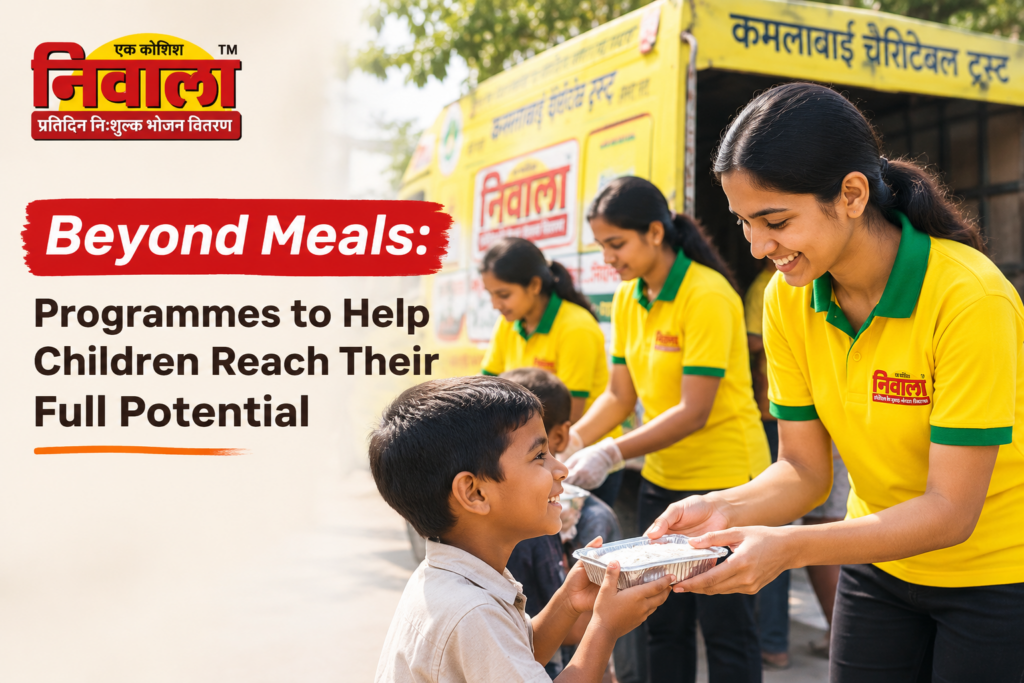
Every child deserves the opportunity to learn, grow, stay healthy and build a brighter future. However, many children from underprivileged backgrounds face challenges such as limited access to education, inadequate nutrition, financial difficulties and a lack of learning opportunities. These challenges can affect their overall development and future prospects. Supporting children requires more than providing food. It involves creating opportunities that help them develop physically, mentally, socially and emotionally. Child development programmes play an important role in addressing these needs by combining nutrition, education, skill development and emotional support. Through comprehensive child welfare initiatives, NGOs, communities and volunteers can help children overcome barriers and reach their full potential.
What Are Child Development Programmes?
Child development programmes are initiatives designed to support children’s overall growth and well-being. These programmes focus on improving children’s access to essential resources, learning opportunities and supportive environments. Unlike initiatives that address only one need, holistic child development programmes consider different aspects of a child’s life, including:-
- Physical health and nutrition
- Education and academic development
- Emotional and social well-being
- Communication and life skills
- Creativity and confidence
- Personal safety and development
These initiatives are particularly important for children from economically disadvantaged families who may not have access to the same opportunities as others.
Why Child Development Programmes Are Important
1. Improving Access to Education
Education gives children the knowledge and skills needed to make informed decisions and pursue future opportunities. However, children from financially disadvantaged families may struggle with school expenses, learning materials or access to additional academic support. Educational support for children can include:-
- School supplies and educational materials
- Learning assistance and tutoring
- Access to educational resources
- Digital learning opportunities
- Encouragement to continue schooling
These initiatives help create a supportive learning environment where children can develop their abilities and build confidence.
2. Supporting Child Nutrition and Health
Nutrition is an essential part of childhood development. Children need balanced meals and adequate nourishment to support physical growth, learning and daily activities. Child nutrition programmes can help address food insecurity by improving access to nutritious meals and promoting awareness of healthy eating habits. Important nutrition-related initiatives may include:-
- Providing nutritious meals to children
- Supporting families experiencing food insecurity
- Promoting awareness of balanced nutrition
- Encouraging healthy eating habits
- Identifying nutritional needs through appropriate support
Food assistance can help children meet their immediate nutritional needs while creating a stronger foundation for their overall development.
3. Encouraging Skill Development
Children have different interests, strengths and abilities. Providing opportunities to explore these interests can help them discover their potential. Skill development programmes for children may include:-
- Art and craft activities
- Communication and language development
- Creative writing and storytelling
- Basic computer education
- Teamwork and leadership activities
- Problem-solving exercises
These activities encourage curiosity, creativity and independent thinking. They also help children develop practical skills that can support their academic progress and future opportunities.
4. Building Emotional and Social Confidence
A child’s development is not limited to academic achievement. Emotional well-being and social confidence are equally important. Children benefit from environments where they feel safe, respected and encouraged to express themselves. Supportive activities can help children:-
- Develop positive relationships
- Improve communication skills
- Express their thoughts and feelings
- Build self-confidence
- Learn empathy and cooperation
Creating inclusive and encouraging environments can help children feel valued and motivated.
Child Development Programmes in India
India has a diverse population with children from different social and economic backgrounds. While many children have access to educational and developmental opportunities, others continue to face challenges related to poverty, nutrition and education. Child development programmes in India aim to improve children’s well-being through different forms of assistance. Government initiatives, educational institutions, NGOs and community organizations contribute to child welfare through programmes that support nutrition, healthcare, education and protection. Some important areas of child development support include:-
- Early childhood care and education
- School education and learning assistance
- Nutrition and health awareness
- Child protection and welfare
- Skill-building and extracurricular activities
- Community-based support for disadvantaged children
These initiatives help create opportunities for children to participate in education, develop important skills and improve their quality of life.
How NGOs Support Holistic Child Development
Non-governmental organizations play an important role in supporting children and families facing social and economic challenges. NGO programmes for child development often focus on identifying community needs and providing assistance through locally relevant initiatives. Their work may include:-
Education and Learning Support
Nutrition and Food Assistance
Organizations working to reduce hunger can support children and families by improving access to meals and essential food resources.
Community Engagement
Awareness and Advocacy
Child Development Initiatives in Jaipur
Jaipur is home to many communities with different social and economic circumstances. Some families face difficulties accessing educational resources, nutritious food and opportunities for their children. Child development initiatives in Jaipur can help address these challenges through community participation and targeted support. Local initiatives may focus on:-
- Educational assistance for children
- Food and nutrition support
- Learning activities and workshops
- Volunteer-led educational programmes
- Community awareness initiatives
- Support for children from disadvantaged backgrounds
Organizations such as Niwala work toward supporting communities through food-related assistance and social initiatives. Such efforts can contribute to creating a more supportive environment for children and families. Community participation is essential to making these initiatives meaningful and sustainable.
How You Can Contribute to Child Development Programmes
Volunteer Your Time
Volunteers can support educational activities, community programmes and awareness initiatives. Depending on an organization’s requirements, volunteers may help with teaching, organizing activities, distributing essential resources or supporting events.
Donate Essential Resources
Donations can help organizations provide children with resources they need. Useful contributions may include:-
- Educational materials
- School supplies
- Nutritious food
- Books and learning resources
- Other essential items requested by the organization
It is always helpful to confirm an organization’s current needs before donating.
Support Community Initiatives
Participating in local child welfare initiatives can help strengthen community support. Individuals can encourage awareness about children’s education, nutrition and development while motivating others to contribute.
Share Your Skills
People with different professional backgrounds can contribute valuable knowledge. Teachers, students, designers, healthcare professionals and other individuals may be able to support activities according to their expertise and the organization’s requirements.
The Role of Food Support in Child Development
Conclusion
Every child deserves the opportunity to reach their full potential, regardless of their family background or financial circumstances. Child development programmes help create these opportunities by supporting education, nutrition, skill development and emotional well-being. From providing learning resources to supporting child nutrition programmes and volunteering opportunities, every contribution can help make a difference. Building a brighter future for children requires collective effort. NGOs, communities, volunteers and individuals can work together to ensure that children receive the support and opportunities they need to grow into confident, capable and independent individuals. Beyond meals, investing in children’s development means investing in a healthier, more educated and more inclusive future.