


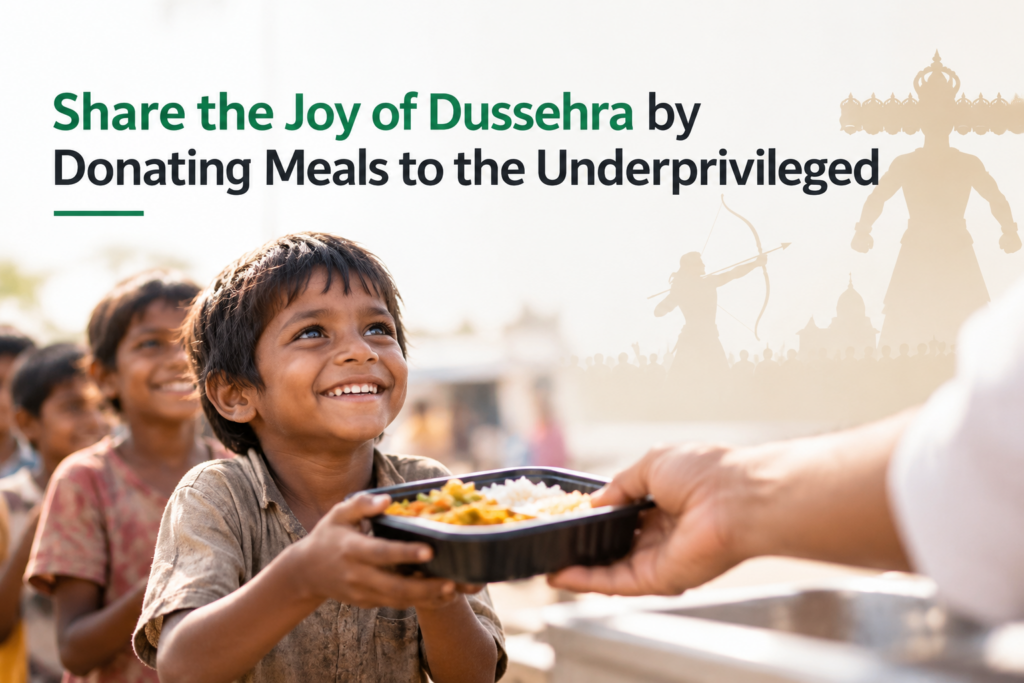
Dussehra is a festival that celebrates the victory of good over evil and reminds us of the importance of truth, courage, and righteousness. Across India, people celebrate this special occasion with family gatherings, cultural events, prayers, and the traditional burning of Ravana’s effigy. However, the true spirit of a festival becomes even more meaningful when its happiness reaches people who are struggling to meet their basic needs. One simple way to make Dussehra more meaningful is by sharing food with people who need it. While many families enjoy festive meals and sweets, some individuals and families may struggle to arrange even one nutritious meal a day. By supporting food donation initiatives, we can spread kindness, bring communities together, and help make the festive season more inclusive. This Dussehra, consider celebrating not only with traditions but also with an act of compassion: donating meals to the underprivileged.
Understanding the True Spirit of Dussehra
Dussehra, also known as Vijayadashami, represents the triumph of good over evil. The festival is associated with Lord Rama’s victory over Ravana and carries a timeless message about standing against wrongdoing and choosing the path of righteousness. Although celebrations differ across regions, the underlying values of kindness, responsibility, and helping others remain relevant everywhere. These values can inspire us to look beyond our own celebrations and recognise the challenges faced by people around us. Hunger is one such challenge. For families experiencing financial difficulties, arranging regular meals can be a daily concern. A festive occasion offers an opportunity to extend support and remind others that they are not forgotten. By donating food, sharing meals, or supporting community feeding initiatives, we can put the values associated with Dussehra into practice. Sometimes, a simple act of giving can make a meaningful difference in someone’s day.
Why Food Donation Matters During Dussehra
1. Helping People Access Meals
Access to regular, nutritious food is essential for health and everyday well-being. Donating freshly prepared meals through responsible organisations or community initiatives can help people facing food insecurity. A meal donation may seem like a small contribution, but collective efforts can support more people and encourage a stronger culture of giving.
2. Making Festivals More Inclusive
3. Encouraging Responsible Food Practices
How to Celebrate Dussehra by Donating Meals
Donate Meals to People in Need
Consider contributing freshly prepared meals through a credible food donation organisation. Before donating, check how the organisation collects and distributes food so that your contribution can be used safely and effectively. If you are planning food donation in Jaipur, look for initiatives that work with local communities and have a clear process for distributing meals.
Support a Food Donation NGO
Non-governmental organisations (ngo) working to address hunger may need financial contributions, food supplies, volunteers, or help spreading awareness. Choose an organisation whose activities and donation process you can verify. You can explore Niwala’s work and available ways to contribute through its official website. Supporting a relevant initiative can help turn your festive intentions into practical action.
Organise a Community Meal
Volunteer Your Time
Encourage Friends and Family to Participate
Share the idea of donating meals with your friends, colleagues, and relatives. A small group can pool resources, coordinate meal contributions, or support an established community initiative. The objective is not to make the biggest donation but to encourage thoughtful and responsible giving.
Food Donation in Jaipur: Making Dussehra More Meaningful
Jaipur is known for its vibrant festivals, cultural traditions, and strong community spirit. During Dussehra, families and neighbourhoods come together to celebrate. The occasion can also inspire people to support community welfare and pay attention to those facing everyday difficulties. People interested in food donation in Jaipur can consider supporting verified local initiatives, contributing towards meal distribution, or volunteering with organisations that address hunger.Before choosing where to donate, consider a few important points:-
- Transparency: Understand how donations are collected and used.
- Food safety: Ensure that donated meals are prepared, stored, and transported hygienically.
- Community needs: Support initiatives that understand the requirements of the people they serve.
- Responsible distribution: Coordinate with experienced volunteers or organisations to help meals reach their intended recipients.
Niwala’s focus on addressing hunger provides a relevant starting point for readers who want to learn more about food-related charitable initiatives. Visit the official website at Niwala.org to learn about its work and explore the ways it makes available for supporting its mission.
How to Donate Food Responsibly
The purpose of food donation is to help people, so the quality and safety of the contribution matter as much as the intention behind it. First, plan the number of meals according to the actual requirement. Avoid preparing excessive quantities simply because it is a festival. Next, choose food that can be transported and distributed safely. Use clean containers, maintain appropriate temperatures, and follow recommended food-handling practices. If you want to donate leftover food, contact a suitable organisation before transporting it. Not all surplus food is safe to redistribute, particularly if it has been left unrefrigerated for too long or exposed to contamination. Financial contributions can be another option when an organisation accepts them. Such support may allow the organisation to arrange meals according to its operational needs. Review the donation process and available information before contributing. Most importantly, remember that food donation should protect the dignity of recipients. Distribute meals respectfully, avoid making assumptions about people’s circumstances, and obtain appropriate consent before photographing or sharing their stories.
Beyond Dussehra: Make Giving a Regular Habit
Dussehra can be the beginning of a more consistent commitment to helping others. Hunger and food insecurity do not disappear when a festival ends, so community support can remain valuable throughout the year. Consider setting aside a small amount each month for charitable giving, volunteering occasionally, or supporting an organisation that works to improve access to food. Families can also teach children about sharing and responsible consumption by involving them in age-appropriate charitable activities. Businesses can explore employee volunteering programmes or community meal initiatives, while residential communities can organise periodic donation drives. The most effective approach is one that is realistic, sustainable, and responsive to actual needs. Small, regular contributions from many people can create opportunities for meaningful collective action.
Celebrate Dussehra with Kindness and Compassion
Dussehra reminds us that goodness, truth, and righteousness deserve to be celebrated. We can honour these values by making thoughtful choices that support people around us. Donating meals, helping a local food initiative, volunteering time, and reducing food waste are practical ways to bring compassion into festive celebrations. These actions do not require grand gestures; they begin with a willingness to recognise another person’s needs and respond responsibly. This Dussehra, share more than sweets and greetings. Consider sharing a meal, supporting a credible food donation initiative, and encouraging others to do the same.