


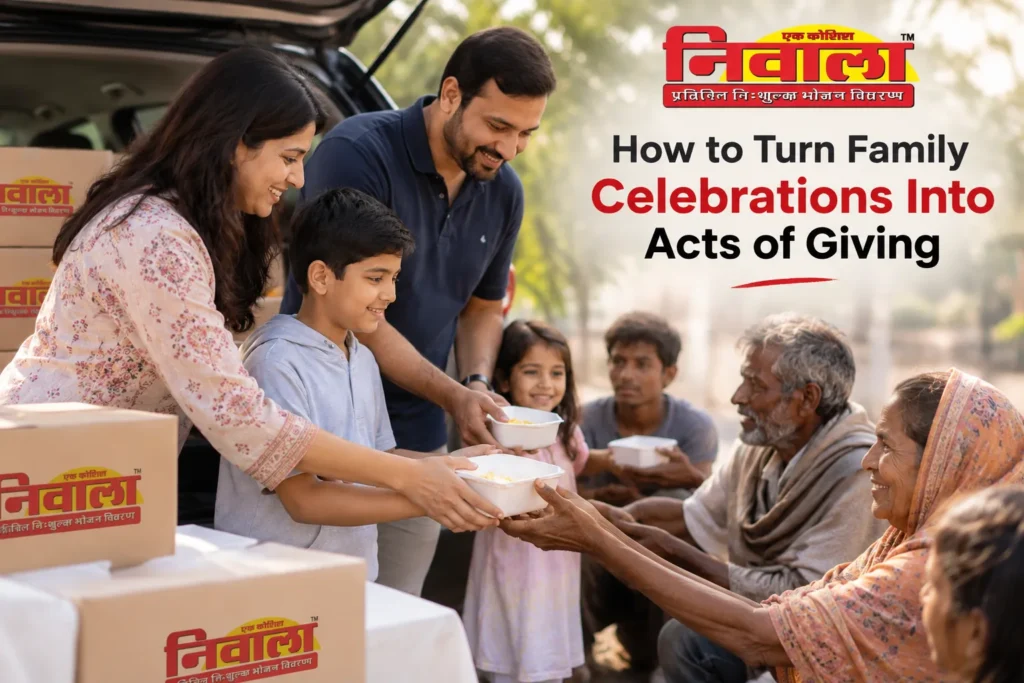
Why Include Giving in Family Celebrations?
Most celebrations already involve planning food, gifts, decorations, and other arrangements. Adding an act of giving does not necessarily require a major change to the event. A family might simply decide to set aside part of its celebration budget for meal sponsorship or food support. The greater value is the habit this creates. When children see parents connecting birthdays, festivals, or anniversaries with giving, they learn that celebrations are not only about receiving. They can also be opportunities to share with others. Over time, a small decision can become a family tradition that feels as natural as cutting a birthday cake or exchanging gifts.
1. Make Birthdays an Opportunity to Give
Birthdays are an easy occasion to introduce children and relatives to charitable giving. Instead of making the day entirely about gifts, a family can choose to sponsor meals or contribute toward food support for people who may need it. Parents can involve children in deciding how a small portion of the birthday budget could be used. Friends and relatives can also be invited to participate voluntarily. For example, instead of bringing another physical gift, guests who wish to do so can contribute toward the family’s chosen giving initiative. The birthday celebration can remain exactly as it is—cake, food, family, and friends—while one additional act of kindness becomes part of the day.
2. Celebrate an Anniversary Through Meal Donation
An anniversary is a natural time to reflect on gratitude and the years shared together. Couples can make meal sponsorship part of their anniversary tradition. There is no fixed amount that makes a contribution meaningful. The better approach is to choose something realistic for the family’s circumstances and maintain the habit consistently. A couple might decide that every anniversary will include support for meals or food assistance. Over the years, this simple tradition can become something children and other family members look forward to participating in.
3. Plan Food Responsibly for Weddings
Weddings involve larger quantities of food, which makes responsible planning especially important. If a family wants to donate suitable surplus food after a wedding, it should plan the process before the event rather than assuming that every leftover item can automatically be donated. Speak with the caterer and the receiving food-support organization in advance. Ask:-
- What types of food can be accepted?
- How should the food be packed?
- How quickly does it need to be collected?
- Who will arrange transportation?
- What food-safety requirements should be followed?
Not every leftover food item will necessarily be suitable for donation. Food should be handled hygienically and shared within an appropriate timeframe. The objective should not be to prepare excessive food simply to create leftovers for donation. Better planning can help reduce unnecessary waste while making suitable food available to people who need support.
4. Give Guests an Alternative to Traditional Gifts
Giving can also become part of the invitation itself. For a milestone birthday, anniversary, or family celebration, hosts can mention that guests who wish to give a gift may instead contribute toward meals or food support. This should always remain voluntary. Even small contributions from several people can support a larger giving effort. For families who already have most of what they need, this can also be a meaningful alternative to receiving unnecessary gifts.
5. Teach Children That Celebrations Can Include Sharing
Children often learn values by observing what adults do. A family celebration provides a natural opportunity to demonstrate generosity without turning the experience into a formal lesson. Depending on their age, children can help with simple activities such as:-
- Choosing suitable packaged food with an adult
- Organizing donation items
- Learning why food should not be wasted
- Understanding that other families may have different food needs
- Helping parents decide how they would like to contribute
For younger children, the message can simply be about sharing. As they grow older, parents can introduce conversations about food insecurity, responsible consumption, community support, and charitable giving. The purpose is not to make children feel guilty about celebrating. It is to help them understand that happiness can also be shared.
6. Make Festivals More Meaningful
Festivals naturally bring together family, food, traditions, and generosity. Whether a family celebrates Diwali, Janmashtami, Eid, Christmas, or another important occasion, giving can become a small part of the celebration. Families might choose to:-
- Sponsor meals
- Donate suitable packaged food
- Support a food distribution initiative
- Organize a small food drive
- Set aside part of their festival budget for food support
The contribution does not have to be large. A useful question while planning a festival is:- “How can we share some of this happiness with someone who may need support?” That question can turn an ordinary celebration into a more thoughtful family experience.
7. Consider Supporting a Local Food Initiative in Jaipur
For families who prefer organized giving, working with a local food-support initiative can make the process more practical. For people searching for food donation in Jaipur, Niwala is a local initiative focused on food support. According to information published by Niwala, the initiative began in 2016 by supporting families accompanying patients at a government hospital in Jaipur and has since expanded its food distribution work to five hospitals. Niwala also offers options related to meal donations, food donation centers, food pickup, and food drives. Families can review the available options and select an approach that fits their occasion. This local experience is particularly relevant for families who want to contribute in Jaipur without having to coordinate every part of food collection and distribution independently.
8. Donate Food Responsibly
Good intentions are important, but responsible execution matters too. Families should not assume that every type of leftover food is appropriate for donation. Before an event, confirm the receiving organization’s requirements, including the type of food accepted, packing instructions, collection timing, and transportation arrangements.
A simple approach is:-
Plan properly → Prepare responsibly → Handle food hygienically → Share suitable food.
For larger celebrations, discussing these details beforehand can make the donation process smoother and reduce the possibility of food being wasted.
The Real Meaning Behind Celebrating Through Giving
How to Make Your Next Celebration More Meaningful
You do not need to make your celebration smaller to make it more purposeful. You can enjoy your favorite food, invite loved ones, exchange gifts, decorate your home, and still choose one simple way to support someone else. If you are looking for food donation in Jaipur, you can explore organized food-support options such as Niwala and choose a form of contribution that fits your occasion. Available options include meal donation, food donation, pickup, and food drives. Before your next birthday, anniversary, wedding, or festival, ask one simple question: “How can we share some of this happiness with someone who needs support?” Sometimes, the answer can be as simple as helping provide a meal.
Frequently Asked Questions
Confirm whether the organization accepts that type of food and ask about food handling, packing, collection time, transportation, and other requirements before the event.